
Chef Notes

Attention is the first ingredient.

Chef Notes is a living record of observations from the kitchen and dining room: why a choice is made, when restraint matters, and how Australian produce, heat, texture, pace and conversation settle together at a table. It complements the Menu Archive rather than attempting to replace its changing context.

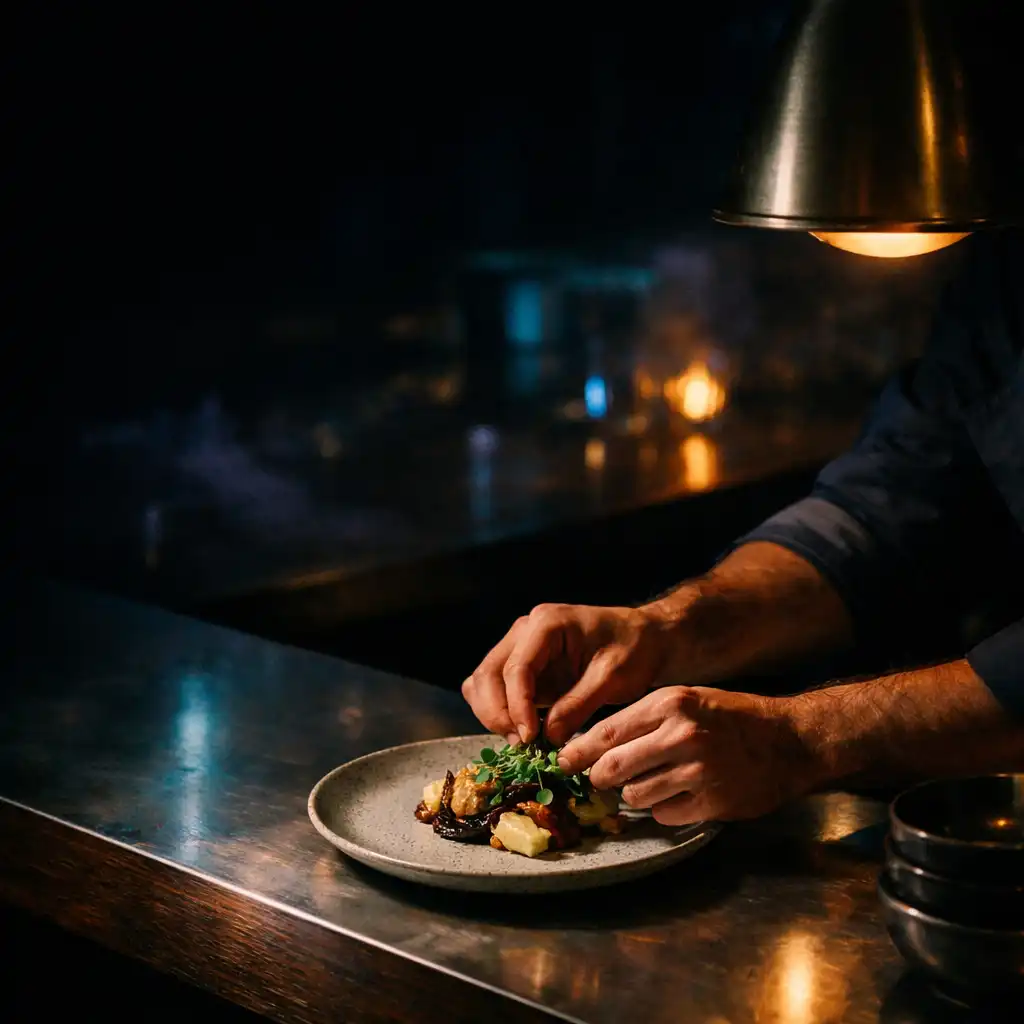
Hands finishing a plate at a low-lit restaurant kitchen pass
Kitchen attention, held just before the table.

The working premise

Considered dining begins with what remains clear.

These notes are not a list of fixed outcomes. They are a way of describing the decisions that keep food readable, a room generous, and an evening open to its own rhythm.

01

Attention before excess

Clarity is often created by deciding what not to add. When a small number of choices can remain legible, temperature, texture and seasoning have room to register. Restraint is not an absence of care; it is a way of making care easier to notice at the table, without asking a guest to decode every gesture.
02

Season as a direction

Australian produce and changing conditions give the kitchen a practical prompt rather than a rigid script. Season directs attention toward what feels most alive, balanced and timely. The Menu Archive offers useful context for that thinking, while recognising that its details describe a record rather than a promise that every element remains unchanged.

03

The pace of the room

Food arrives inside a wider rhythm. A table needs room for observation, conversation and pauses that do not need filling. That sense of pace matters across Fortune & Willow: in the dining room first, and later in the distinct social atmosphere of an offline poker evening. Neither experience needs to hurry the other.

A measured table changes what can be noticed.

Notes from the pass

Small decisions, made in sequence.

The pass makes timing visible. It is where preparation meets the immediate conditions of a plate, a table and a room already in motion.

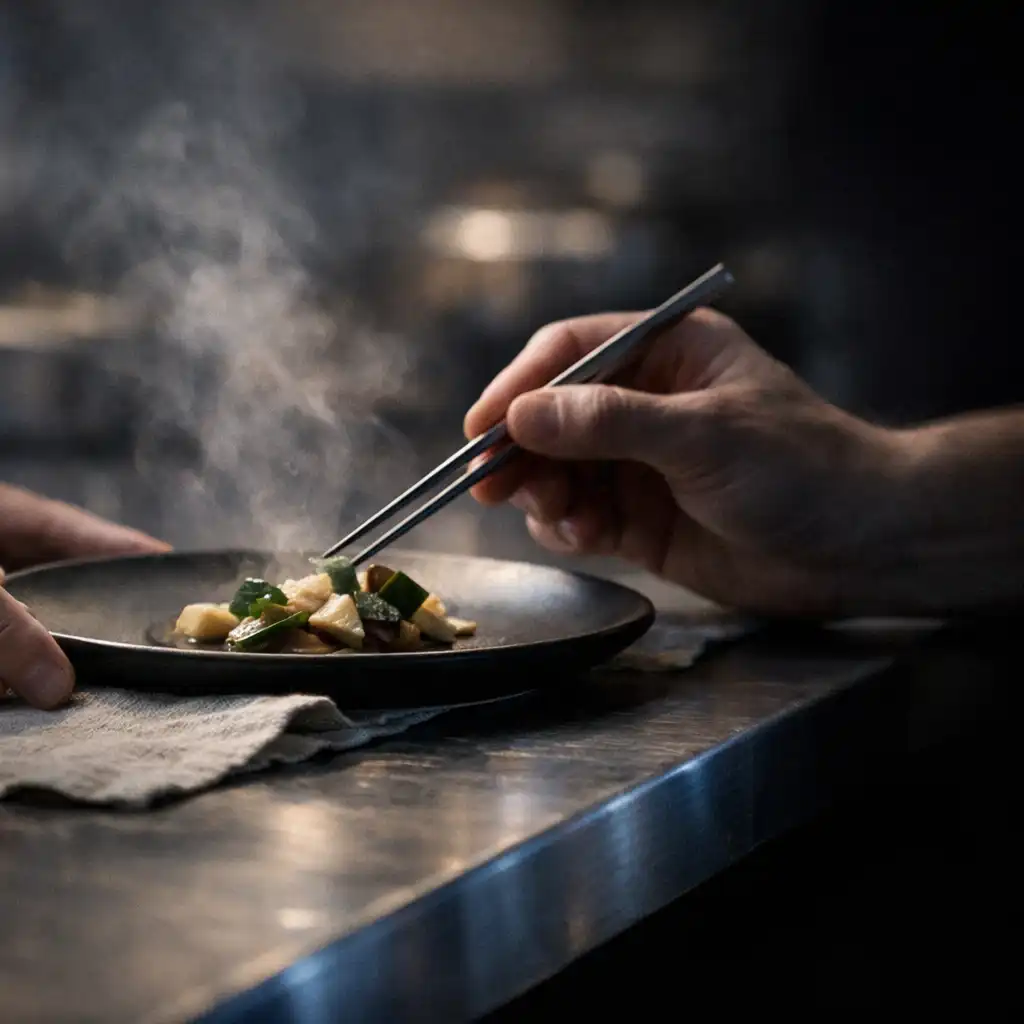
Two hands carefully finishing a ceramic plate at a dark kitchen pass
Precision at the pass is responsive rather than theatrical.

Pass note 01

Heat has a sequence

Heat is not a single dramatic moment. It is managed through preparation, finishing and the short interval before a plate reaches the table. The useful question is not simply whether something is warm or cool, but how its temperature will continue to change as a guest begins to eat. A considered finish responds to that sequence.

Pass note 02

Texture needs contrast

Contrast gives a plate movement, but it is most useful when it has a reason. Crisp can clarify soft; cool can steady warmth; richness can be made more precise by something clean. The aim is not novelty for its own sake. It is to make each sensation legible enough that the table can follow the food without effort.

Pass note 03

A plate is part of the conversation

A plate has its own point of view, yet it is only one voice at a table. It should leave room for company, for the changing energy of the dining room and for a conversation that may continue beyond dinner. Considered dining does not ask to be the only thing noticed; it helps make the evening more attentive.

The room shapes the meal

A dining room can hold attention without demanding silence.

Beyond the plate, a meal is shaped by the quality of the room around it: the way light settles, the material weight of a table, the rise and fall of nearby conversation, and the permission to stay present with the people who came together.

A room for attention

Hospitality is not a demand for perfect quiet or a fixed idea of atmosphere. It is the creation of enough ease to notice what matters: food arriving at the right moment, the company across the table, and the gradual shift in an evening’s energy. Materials, light and sound are meaningful when they support that attention rather than compete for it.

A meal should leave room for the people at the table.

Service as timing

Service is a practice of reading rhythm. Sometimes context is useful; sometimes a pause says more. The work is to make space without making assumptions, to offer a clear point of reference and then let the table keep its own pace. That approach keeps hospitality warm and exact without turning every moment into an interruption.

Dining before the cards

One evening, distinct rooms.

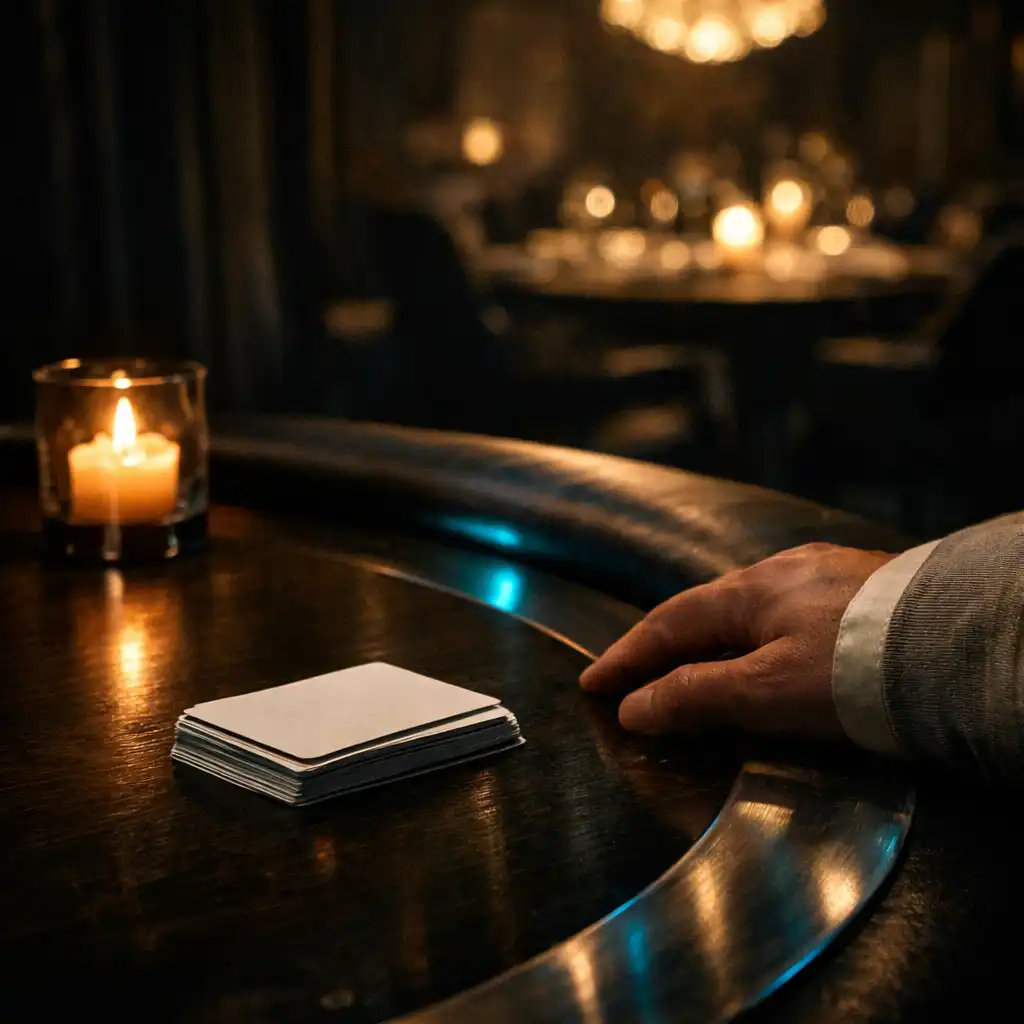
A refined dark timber card table with neatly placed cards and low evening light
Dining and the card room share an evening, not a single purpose.

A considered transition

One evening, distinct rooms

Fortune & Willow brings considered dining and offline poker into one venue while allowing each experience its own pace and purpose. A guest may come to understand the kitchen’s approach, or to spend time in the card room, or simply to learn how the formats relate. Practical context for the latter sits separately in Offline Poker Formats.

Card-room context

Conversation carries forward

The movement from a dining table to a social poker setting can be a continuation of conversation and shared attention, not a demand to participate. Poker tables and a quietly high roller atmosphere belong to a distinct card-room evening. Visitors can choose their own relationship to that side of the venue.

Four things we keep returning to

A menu is a field of relationships.

01

Ingredient condition

An ingredient has a condition as well as a name: ripeness, freshness, temperature and the point at which it is most clearly expressed. The kitchen returns to these questions because they help a decision stay grounded in the immediate work rather than in an idea applied from a distance.

02

Useful acidity

Acidity can create lift, definition and continuity across a plate. Its value is not technical display. Used with care, it helps a richer or warmer element remain clear, and gives the meal a sense of movement that can be felt without needing to be named.

03

A reason for richness

Richness needs context. It becomes more satisfying when it has counterpoint, when it can resolve into something clean or be held in balance by another texture. The question is not whether richness belongs, but what allows it to remain part of a meal with clarity and pace.

04

The last impression

A clean, resolved finish gives a course, and sometimes an evening, space to continue in another form. It should not close down conversation. It should leave the table with enough clarity to remember what mattered and enough openness to stay with the people around it.

These are useful lenses for reading a menu, not instructions for what any one visit should become.

Reading the Menu Archive

An archive, not a script.

The Menu Archive records the thinking and shape of the kitchen’s work over time. It can help visitors understand relationships, recurring concerns and the kinds of decisions that matter here. It is not a fixed promise that every archived detail will appear in the same way again; its value is context, not certainty.

View the Menu Archive

Read with attention

Look for relationships

As you read, notice temperature, texture, restraint, season and the balance of a table’s progression. These are not separate ideas; they are ways a menu can hold together while still leaving room for discovery.

Keep the context close

Chef Notes can sit alongside menu material whenever you want more of the kitchen’s point of view. Return here for the reasoning behind the language, not a prediction of a particular plate.

An evening with room to choose

Choose the context that suits your visit.

Each path has its own practical information. Follow the one that gives you the clearest starting point.

01

Come for considered dining

For guests who want to spend time with the kitchen’s approach and the atmosphere of the room, the Menu Archive offers useful context. If you want to discuss a visit or a private gathering, the enquiry page is the appropriate next step.

02

Stay for social poker

Offline poker is an in-person card-room experience for visitors who want to understand formats, poker tables and table culture. The dedicated format and etiquette pages offer a clear place to begin before deciding what feels appropriate.

03

Explore tournament evenings

Texas Hold’em tournaments are a distinct format. The dedicated information page provides the right context to read before making an enquiry, so visitors can understand the evening on its own terms rather than folding it into a dining visit.

Selected journal threads

Ideas that continue beyond the pass.

The venue journal makes room for longer reflections without pretending that every thought must arrive as a finished article. These are the kinds of threads that can extend the conversation.

Journal thread

Kitchen observation

A longer reflection may stay with one culinary idea: a seasonal condition, a preparation decision, the rhythm of a room, or the memory a menu leaves behind. The purpose is not to announce a fixed result, but to make the thinking around it available to anyone who wants to look more closely.

Card-room thread

Card-room observation

Another thread may consider conversation, etiquette, offline poker and the atmosphere around a card-room evening. It remains separate from gameplay rules and tournament information, attending instead to the social conditions that make a shared room feel considered.

Continue the conversation

Ask with the right context in view.

Make an enquiry when you would like context for dining, a private gathering, or the relationship between an evening meal and Fortune & Willow’s distinct card-room experience. The enquiry page is the right next step for a considered question.