Fortune & Willow / Fitzroy

Card lounge etiquette

Fortune & Willow’s card lounge is a composed extension of the dining room: a place for considered dining, social poker, poker tables, Texas Hold’em tournament evenings and immersive card-room conversation. Etiquette is simply the shared practice that keeps focus warm, movement measured and every guest comfortable. The high roller atmosphere is polished and attentive, never theatrical or exclusionary. Whether you know the room well or plan to observe for the first time, this guide offers a calm way to arrive prepared.

Read table guidance
  • Read the room
  • Share the table
  • Keep play clear

Shared agreement

The room’s shared agreement

Respectful participation is collaborative. A little awareness gives dining guests, hosts, dealers, observers and players the space to enjoy the evening in their own way.

01 / Room tone

Bring attention, not performance

Fortune & Willow is a high-end Australian restaurant and offline poker venue, so conversation, food and cards are allowed to hold the room’s attention without competing for it. Keep your voice at a level that lets nearby tables remain present, and resist turning a hand, story or reaction into a room-wide spectacle.

Quiet observation is a valid way to join the atmosphere. Presence matters more than display.
02 / Table space

Make space for every seat

Poker etiquette begins with awareness of dealers, hosts, fellow guests and the physical table. Arrive ready to settle before joining a seat, keep personal belongings contained, and leave pathways clear for service and movement around the poker tables.

When a host gives direction or a table needs to reset, pause first. That small moment of space keeps the room comfortable for everyone.

03 / Clear guidance

Let clarity travel faster than assumption

If a format, seat or table rhythm is unfamiliar, ask a host rather than guessing. Newcomers to offline poker and the card room are welcome when curiosity is paired with good timing. A clear question before a hand begins prevents an interruption once attention has settled.

Hosts and table leads are there to make the experience legible, calm and enjoyable for all guests.

Before the first hand

Arrival, seating and first impressions

The room is easier to enjoy when the first few minutes are unhurried. Let the host orient you, let active tables keep their rhythm, and give yourself time to settle into the evening.

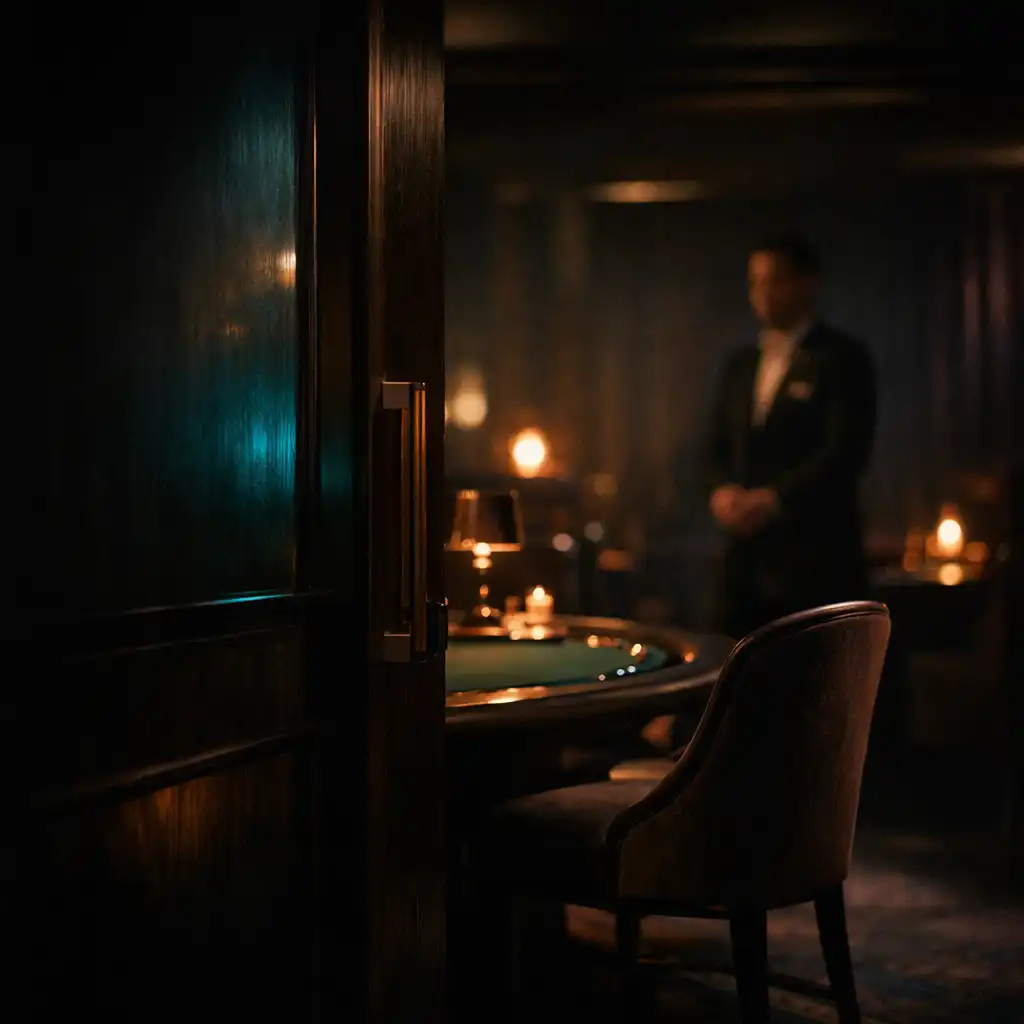
Smoked-glass entrance into Fortune and Willow’s softly lit card lounge
A composed threshold between the dining room and card lounge.
  1. 01

    18 Willow Lane, Fitzroy VIC 3065, Australia

    Arrive with enough room to arrive well

    Allow time to greet the host and orient yourself before moving toward the lounge. A composed arrival supports both dining guests and active tables. The host can direct you to the appropriate lounge area, table or waiting point; rushed movement becomes more disruptive once the room is engaged.

  2. 02

    Host direction

    Follow the host’s lead

    Hosts coordinate seating, table readiness and the flow between restaurant and card-room moments. Wait to be invited to a poker table or observation position. Do not pull a chair into an active table without direction, and ask before changing seats or joining companions elsewhere.

  3. 03

    Quiet threshold

    Keep the threshold calm

    Silence or discreetly mute phones before approaching the lounge, and keep screens and calls away from active poker tables. Store bags, outerwear and personal items so chairs, aisles and service routes remain clear. A warm greeting is welcome; let it stay close to your group.

Practical conduct

At the poker table

Clear turns and contained gestures make social poker easier to follow. The aim is not formality for its own sake; it is a table where every guest can read the moment.

01

Wait for the table’s cue

Enter play only when a host or table lead indicates that the seat and hand are ready. Observe the current hand before taking up space at the poker tables. Do not interrupt a decision, reveal information or rush the sequence; a brief pause protects concentration for everyone seated.

02

Keep cards and hands readable

Handle cards deliberately and keep them close to your own position. Avoid touching another guest’s cards, chips, seat or personal items. Let the dealer or host clarify procedure when you are uncertain. A visible, ordered table space means fewer assumptions and less distraction.

03

Room rhythm

Speak after the hand, not through it

Social poker can be lively without talking across active attention. Keep commentary, strategy talk and reactions away from a hand in progress, then return to stories and broader conversation during natural pauses. If another guest is focused, take that cue seriously and let the table breathe.

04

Let the table remain shared

Take a clear turn without delaying the table unnecessarily, and avoid coaching, pressuring or speaking for another guest. Offline poker works best when pacing is gracious and staff direction is respected. Thank the dealer, host and fellow guests as the table changes over; shared courtesy is part of the evening’s rhythm.

The social rhythm

Conversation, dining and the high roller atmosphere

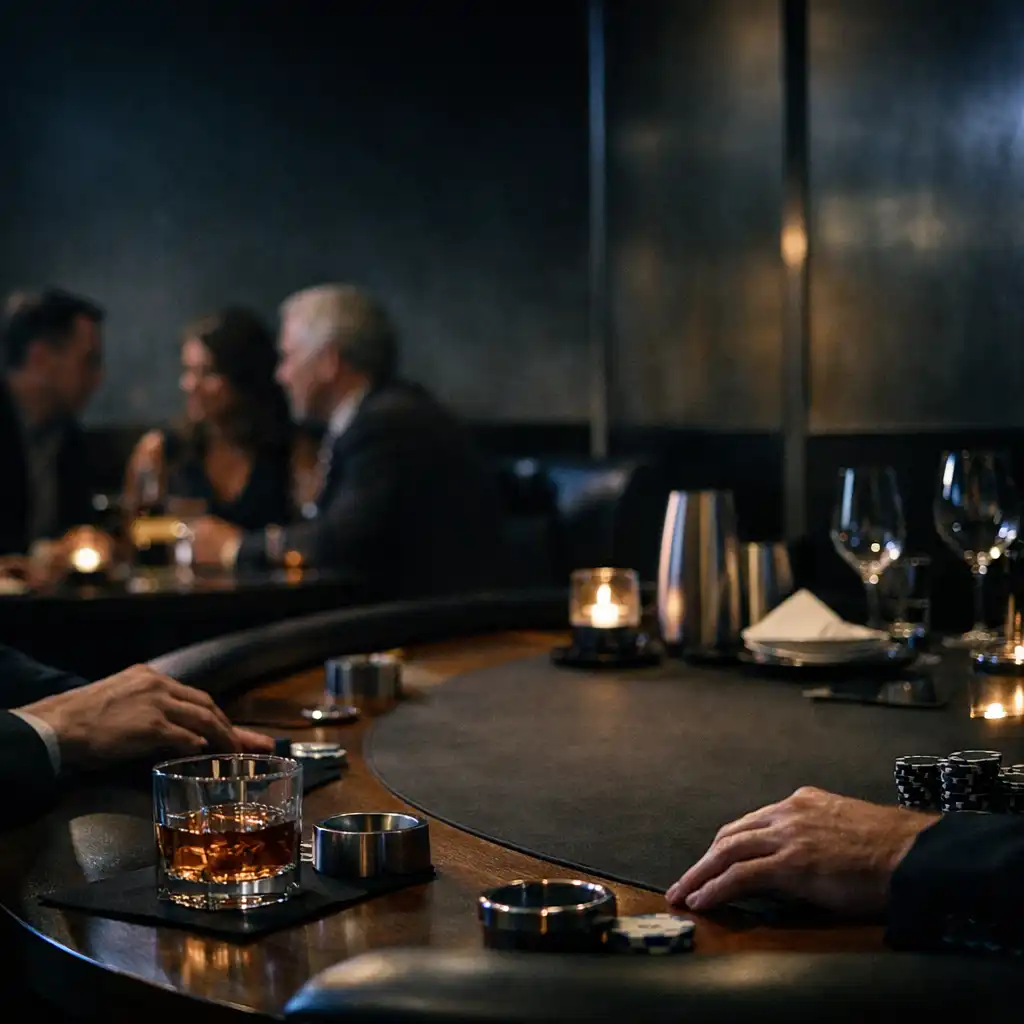
Candlelit dining and conversation beside a refined timber card table
Dining, conversation and table attention held in balance.

Let dining keep its own pace

Considered dining is part of Fortune & Willow’s immersive card-room evenings, with service and food treated attentively around the lounge. Give staff room to move, keep surfaces ordered so food, drink, cards and personal items do not compete, and use a natural pause to step away for dining rather than disrupting an active table.

Conversation belongs, volume does not

The desired tone is intelligent, warm and attentive rather than hushed or performative. A high roller atmosphere can still be generous: share the table with guests who may be concentrating or meeting for the first time, keep laughter close to the immediate group, and avoid commentary that makes another guest feel observed or exposed.

Event protocol

Tournament evening courtesy

Texas Hold’em tournament evenings bring a little more structure to the card room. The same welcome remains, while clear timing and concise questions help each stage of the evening settle well.

Stage 01 / Before play

Before the first hand

Arrive ready to hear the evening’s format briefing and direct questions to the host before play begins. Confirm your assigned place or observation area, and keep introductions or catch-ups brief once the room is gathering. Fortune & Willow’s Texas Hold’em tournaments are easier to enter when everyone can hear the opening guidance.

Active stage / During rounds

During active rounds

Stay present when your table is active, take attentive turns and keep interruptions to a minimum. Direct concise questions to the appropriate host or dealer, and avoid discussing a live hand in ways that affect other guests. Tournament evenings rely on a shared pace, not on unnecessary urgency.

Return marker / Breaks

At breaks and transitions

Breaks are the right moment for broader conversation, dining movement and questions about what follows. Return promptly when the room is called back together, use transitions to reset personal items and settle your seat, and respect guests who prefer quiet preparation before the next round in the card room.

Considerate intervention

Signals that protect the room

Uncertainty is normal. A small, well-timed response can preserve the room’s ease without making a moment larger than it needs to be.

Ask

You are unsure about a format

Pause and ask a host before joining, commenting or moving seats in an offline poker setting. A brief question before a hand is preferable to a correction during it. Hosts can explain the appropriate level of participation, and curiosity is welcomed when it respects timing.

Ask a host about a format

Reset

A conversation is becoming distracting

Take a cue from active play and nearby concentration. Lower the volume, or move an extended conversation away from the table edge when appropriate. If the room needs support, ask a host discreetly rather than confronting another guest in the moment.

Ask for room guidance

Notify

You need to step away

A quick word with a host keeps seating and poker-table flow clear. Leave your place neatly, avoid leaving a disruption at the table edge, and return only when the host or table rhythm makes it appropriate. Small notices make transitions easier for everyone.

Ask about stepping away

Comfort concern

You notice behaviour that feels uncomfortable

Speak discreetly with a host rather than escalating the concern at the table. The room’s shared comfort matters alongside the evening’s pace, and a host can respond without making a spectacle. Use clear, calm language about what you observed.

Seek host support

A close look

A close look at the lounge

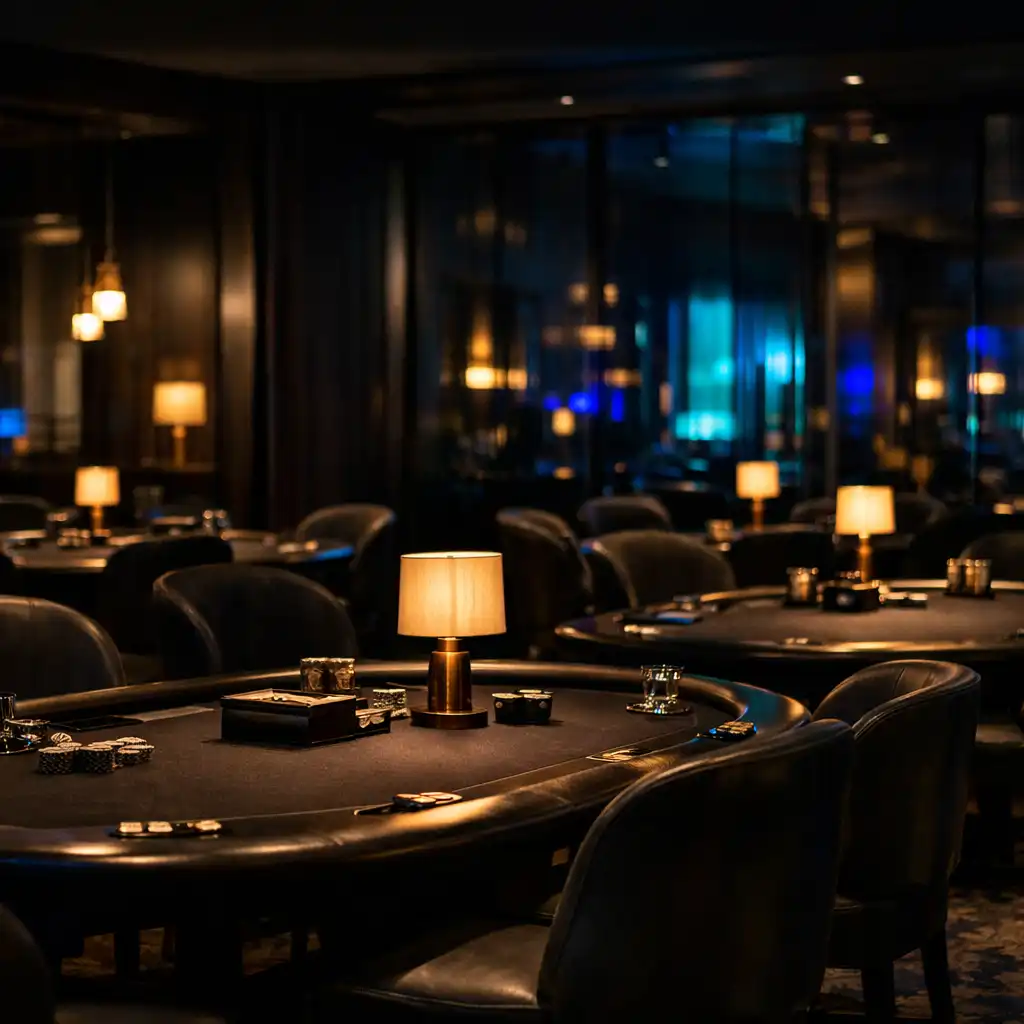
Wide view across prepared poker tables in Fortune and Willow’s dark timber card lounge
A room designed for presence rather than spectacle.

A room built for presence

Fortune & Willow is an Australian restaurant and offline poker venue where light, material, dining and table attention sit in balance. The lounge feels immersive because guests contribute to its calm rhythm: service routes remain open, active tables keep their focus, and both participation and careful observation have a place in the evening.

Quiet precision

Clear turns, contained movement and attention to active tables make social poker more enjoyable for everyone in the room.

Warm hospitality

Staff direction, generous conversation and room for considered dining create welcome without allowing the lounge to become noisy.

Shared focus

During immersive card-room evenings, poker is at its most convivial when each guest helps protect another guest’s attention.

Useful answers

Questions before you join us

These practical answers are a starting point. When the room’s rhythm or a format needs clarification, a host is the best person to ask.

Do I need to know poker before entering the card lounge?

No confidence is assumed. Guests may be dining, observing, socialising or taking part in poker. If you are considering a table, ask a host about the appropriate format before joining or commenting on an active hand. That early question helps you find a comfortable place in the room.

Information Can I watch a Texas Hold’em tournament evening?

Observation should follow host direction and protect the focus of active tables. Ask where to stand or sit, and wait for a natural pause if you would like context about the Texas Hold’em tournament evening. The host can guide you without interrupting the room’s concentration.

What should I wear and bring?

Arrive in a way that suits a considered, premium dining and card-room setting. Keep belongings contained, silence or discreetly mute phones, and leave room around chairs and service paths. Practical readiness and respect for shared space matter more than a prescribed dress code.

Host guidance Can I ask for help while seated?

Yes. Hosts are the right people to approach when you are unsure about the lounge, poker tables or the evening’s rhythm. Keep questions concise and raise them at a natural pause where possible. Staff direction is there to support every guest’s comfort and the table’s clarity.

How do I plan a private card-room gathering?

Begin with an enquiry and share the context of your intended occasion: whether it centres on dining, the card lounge, social poker or a private gathering. This helps Fortune & Willow understand the kind of guidance you need without assuming a format, capacity or availability.

Make an enquiry for a private gathering

Next step

Plan your evening with care

A considered enquiry starts the right conversation. If you would like help choosing a social poker format, understanding a tournament evening or discussing a private gathering, share the context of your intended visit. Mention whether your plans centre on dining, the card lounge, social poker or a private occasion; the guide is a starting point, and hosts can clarify the room’s current rhythm.